





51
News:
The r.Net calendar is live and ready for your events! Why not use it to promote your event? Let everyone know about it -- hey, you might even get some new blood into your time period as our Forum covers all time periods. Hey, give it a try!
 Recent Posts

52
Middle Ages / Re: Medieval Pirates
« Last post by Karl Helweg on September 14, 2020, 07:19:35 PM »Baldassarre Cossa aka (Anti)pope John XXIII
Baldassarre Cossa (c. 1370 – 22 December 1419) was Pisan antipope John XXIII (1410–1415) during the Western Schism. The Catholic Church regards him as an antipope, as he opposed Pope Gregory XII whom the Catholic Church now recognizes as the rightful successor of Saint Peter.
Baldassarre Cossa was born on the island of Procida in the Kingdom of Naples to the family of Giovanni Cossa, lord of Procida. Initially he followed a military career, taking part in the Angevin-Neapolitan war. His two brothers were sentenced to death for piracy by Ladislaus of Naples.
He studied law at the University of Bologna and obtained doctorates in both civil and canon law. Probably at the prompting of his family, in 1392 he entered the service of Pope Boniface IX, first working in Bologna and then in Rome. (The Western Schism had begun in 1378, and there were two competing popes at the time, one in Avignon supported by France and Spain, and one in Rome, supported by most of Italy, Germany and England.) In 1386 he is listed as canon of the cathedral of Bologna. In 1396, he became archdeacon in Bologna. He became Cardinal deacon of Saint Eustachius in 1402 and Papal legate in Romagna in 1403. Johann Peter Kirsch describes Cossa as "utterly worldly-minded, ambitious, crafty, unscrupulous, and immoral, a good soldier but no churchman". At this time Cossa also had some links with local robber bands, which were often used to intimidate his rivals and to make highwayman attacks on carriages. These connections added to his influence and power in the region.
In May 1408 Baldassare was one of the seven cardinals who deserted Pope Gregory XII, and convened the Council of Pisa. Cossa became the leader of a group whose objective was to finally end the schism. The result was silly beyond belief as they deposed Pope Gregory XII and Anti-Pope Benedict XIII and elected a third Pope Alexander V in 1409. As the two existing popes – Gregory and Benedict – clearly enjoying their current positions of power – simply ignored this decision – there were now not just two Popes – but three!
During his absence John was deposed by the council, and upon his return he was tried for heresy, simony, schism and immorality, and found guilty on all counts. Gibbon wrote, "The more scandalous charges were suppressed; the vicar of Christ was accused only of piracy, rape, sodomy, murder and incest."
This piratical schism contributed to the Hussite Rebellion among other historical events.

https://www.beyondtheyalladog.com/2011/07/baldassare-cossa-the-pirate-pope/
https://en.wikipedia.org/wiki/Antipope_John_XXIII
https://www.youtube.com/watch?v=fsCyWIUKyAo&app=desktop
 His personal coat of arms and possible pirate flag? This motto implies membership in the Odre du Croissant which was roughly the Italian equivalent of the English Order of the Garter. https://en.wikipedia.org/wiki/Ordre_du_Croissant
* Curiously the original coat-of-arms that I posted with his motto and nifty chaninmail collar-of-estate has disappeared(?)* Here is the best that I can find now:

** Third time's the charm, right?
Baldassarre Cossa (c. 1370 – 22 December 1419) was Pisan antipope John XXIII (1410–1415) during the Western Schism. The Catholic Church regards him as an antipope, as he opposed Pope Gregory XII whom the Catholic Church now recognizes as the rightful successor of Saint Peter.
Baldassarre Cossa was born on the island of Procida in the Kingdom of Naples to the family of Giovanni Cossa, lord of Procida. Initially he followed a military career, taking part in the Angevin-Neapolitan war. His two brothers were sentenced to death for piracy by Ladislaus of Naples.
He studied law at the University of Bologna and obtained doctorates in both civil and canon law. Probably at the prompting of his family, in 1392 he entered the service of Pope Boniface IX, first working in Bologna and then in Rome. (The Western Schism had begun in 1378, and there were two competing popes at the time, one in Avignon supported by France and Spain, and one in Rome, supported by most of Italy, Germany and England.) In 1386 he is listed as canon of the cathedral of Bologna. In 1396, he became archdeacon in Bologna. He became Cardinal deacon of Saint Eustachius in 1402 and Papal legate in Romagna in 1403. Johann Peter Kirsch describes Cossa as "utterly worldly-minded, ambitious, crafty, unscrupulous, and immoral, a good soldier but no churchman". At this time Cossa also had some links with local robber bands, which were often used to intimidate his rivals and to make highwayman attacks on carriages. These connections added to his influence and power in the region.
In May 1408 Baldassare was one of the seven cardinals who deserted Pope Gregory XII, and convened the Council of Pisa. Cossa became the leader of a group whose objective was to finally end the schism. The result was silly beyond belief as they deposed Pope Gregory XII and Anti-Pope Benedict XIII and elected a third Pope Alexander V in 1409. As the two existing popes – Gregory and Benedict – clearly enjoying their current positions of power – simply ignored this decision – there were now not just two Popes – but three!
During his absence John was deposed by the council, and upon his return he was tried for heresy, simony, schism and immorality, and found guilty on all counts. Gibbon wrote, "The more scandalous charges were suppressed; the vicar of Christ was accused only of piracy, rape, sodomy, murder and incest."
This piratical schism contributed to the Hussite Rebellion among other historical events.
https://www.beyondtheyalladog.com/2011/07/baldassare-cossa-the-pirate-pope/
https://en.wikipedia.org/wiki/Antipope_John_XXIII
https://www.youtube.com/watch?v=fsCyWIUKyAo&app=desktop
His personal coat of arms and possible pirate flag? This motto implies membership in the Odre du Croissant which was roughly the Italian equivalent of the English Order of the Garter. https://en.wikipedia.org/wiki/Ordre_du_Croissant * Curiously the original coat-of-arms that I posted with his motto and nifty chaninmail collar-of-estate has disappeared(?)* Here is the best that I can find now:
** Third time's the charm, right?
53
Middle Ages Vendors / Merchant Releif
« Last post by Karl Helweg on August 27, 2020, 04:06:00 PM »A FB group has been set up to help SCA merchants who have lost income due to all of the COVID cancellations: https://www.facebook.com/groups/2629774650640671

54
1870-1900 / Re: Firearms Class
« Last post by Karl Helweg on August 25, 2020, 12:35:26 PM »This video proposes a theory for European firearms dominance: https://www.youtube.com/watch?v=FE57Fukbcm4&feature=share&fbclid=IwAR3yq08FUc9F7BgumbJ0POyyC0wdXDoJI654yyc98t_VlgjXPL-AVucJkGI
I believe that a very important factor driving European advancements was patent law which granted significant financial benefits to inventors and gave them the freedom to share their innovations. https://en.wikipedia.org/wiki/History_of_patent_law
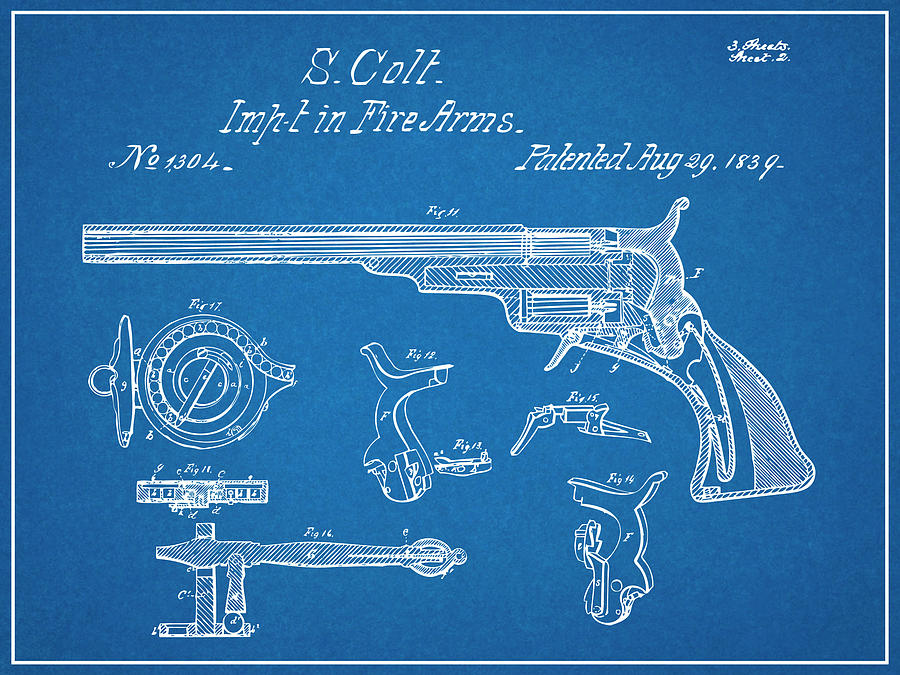
I believe that a very important factor driving European advancements was patent law which granted significant financial benefits to inventors and gave them the freedom to share their innovations. https://en.wikipedia.org/wiki/History_of_patent_law
55
Middle Ages / Re: Medieval Pirates
« Last post by Karl Helweg on August 20, 2020, 01:30:17 PM »
Peter Easton - The English/Canadian/Savoy Pirate
Peter Easton (also known as Peter Eston) was an English pirate that became known not only as one of the most notorious pirates from this country but also as one of the most successful pirates of all time. Born around 1570, he became known to authorities as a sea pirate during his plundering career that ranged between 1611 and 1614. During that time, he managed to achieve a thing that few pirates in history have managed to build in their lifetimes – to create such a formidable pirate fleet around him that he became more powerful than legitimate governments, sovereigns or other private forces of his time. Even more impressively, he managed to retire from piracy and live enjoying the incredible wealth he collected on the sea.
During his career as a pirate, Peter Easton was described not as a bloodthirsty monster bent on destruction at sea, but as a highly capable naval officer who was well-versed in tactic, leadership, and trade. He was often praised for being a brilliant navigator, brave, bold, and tactician that can extract the maximum from the ships and crew he possessed. These abilities helped him to gather around him a formidable force that helped him target more and more ambitious targets, all the while remaining in contact with English crown which tried several times to give him pardon and remove his dangerous presence from the sea.
During height of his career, Peter Easton was regarded as the most successful Corsair of all time
Life as Privateer
Very little is known about the early life of Peter Easton, a man that would eventually become one of the most successful pirates of his time. He came from the family who had a rich history of supporting English Crown and being part of Crusades and various sea skirmishes against Spanish Armada. His first historical record of activity on the sea comes from 1602 when he was tasked by the commission from Elizabeth I of England to protect the English fishing fleet in Newfoundland against Spanish intrusions as a privateer. During those years, he actively protected English shipping and harassed Spanish merchants and fishermen (who were during that time also equipped for naval combat). His base of operation was located in Harbour Grace, Newfoundland and Labrador (today Canada), and his flagship ornamented with the Saint George’s Cross was named “Happy Adventure”.
Fall into Piracy
Lives of many English privateers were changed forever on 23 June 1604, when Elizabeth I was succeeded by James I who immediately sued for peace between England and Spain. This meant that all privateers suddenly became jobless, and many of them immediately turned to what they knew the best – piracy.
Peter Easton was one of those privateers who continued attacking Spanish assets in Atlantic as nothing has ever happened, which immediately turned him into a pirate. But he was not satisfied only with Atlantic coast near Canada. Under the financial backing of the powerful Canadian family of Killgrews, he continued harassing Spanish ships even in the Mediterranean, seeking gold and plunder that he could sell back in pirate havens in West Indies. When his fleet grew to the armada of 10 pirate ships, he started to actively attack even English targets, seeking more wealth and coercing more and more fishermen into his pirate crew.
Easton was considered as being an extremely successful pirate. During one campaign of piracy, he plundered more than 30 ships, managing to capture large wealth and several high-value captives. One of those captives was even sent to obtain to Easton an official government pardon from England for him and his entire crew, but by the time the pardon arrived at his home base of Harbour Grace, Easton moved to Barbary Coast where he continued to harass the Spanish. By that time, his pirate “crew” grew into an actual army that counted more than 1500 men. This force enabled him to execute even more daring plans, including an incredible attack on the Spanish plate fleet in the sea around the Azores. The details of this battle are lost to history, but what was remembered is that immediately after that event Easton appeared on the coast of Tunis bringing with himself incredible wealth and four large Spanish galleons.
James Cooks' general chart of Newfoundland
During his years of activity, Peter Easton held a reputation of the most dangerous and leading corsairs who fought against Spain. In a span of just a few years, he amassed one of the largest wealth in the history of piracy and was unmatched on the sea where he was never cornered or lost a battle against numerous fleets who were commissioned to hunt him down.
Retirement
After several successful years on the sea, the English pardon finally reached Easton when he was anchored in the port of Villefranche, Savoy, which was then known as a free port and a haven of pirates. He elected to accept the pardon and gained the approval of the local Duke of Savoy who was very interested to take advantage of the very wealthy Easton who immediately purchased a mansion, a title of “Marquis of Savoy” and even found a wife. According to surviving documents, he remained in Savoy where he served the local duke until 1620 when history loses track of him. To this day, it is not known how Peter Easton lived the remainder of his life, and how or when he died.
Peter Easton Flag
Many pirate captains of the Golden Age of Piracy spread fear and chaos utilizing skills of theatric intimidation. One of most successful tactics of this kind was displaying of pirate flag while their ship neared the pray, giving time to defenders to properly grasp the seriousness of their situation. Before the so-called “Jolly Roger” flags become popular, and started featuring numerous ominous ornaments such as skulls, bones and weapons, pirate captain Peter Easton popularized very simple form of pirate flag – pure black flag. During his pirate career that made him one of the wealthiest and most successful pirates of all time on the Atlantic sea, the sight of Peter Easton’s pure black flag drove chills into the heart of any merchant or naval officer who saw it. Decades later, the tales of this flag served as a foundation for many other famous Jolly Rodger flags, such as those flown by Calico Jack Rackham (white skull with two interlocked swords), Sam Bellamy and Blackbeard (white skull with two interlocked bones).
Name Peter Easton
Category Pirate, Privateer
Nationality English
Born Around 1570
Active 1611-1614
Activity Region Newfoundland, Mediterranean, Atlantic, West Indies
Died Unknown
Rank Captain
Ships Happy Adventure

https://historyofpiracy.weebly.com/peter-easton.html
https://en.wikipedia.org/wiki/Peter_Easton
More on pirates in Savoy: https://en.wikipedia.org/wiki/Villefranche-sur-Mer
57
1870-1900 / Re: SteamPunk and what it might mean to reenactors
« Last post by Karl Helweg on August 03, 2020, 06:01:21 PM »https://edgewood.news/sass-end-of-trail-gets-steampunked/ A little on the SteamPunk/SASS crossovers.
Although most SteamPunk groups are on FaceBook these days there are some dedicated forums full of cached information like:
http://welcometosteampunk.com/
http://brassgoggles.co.uk/forum/index.php
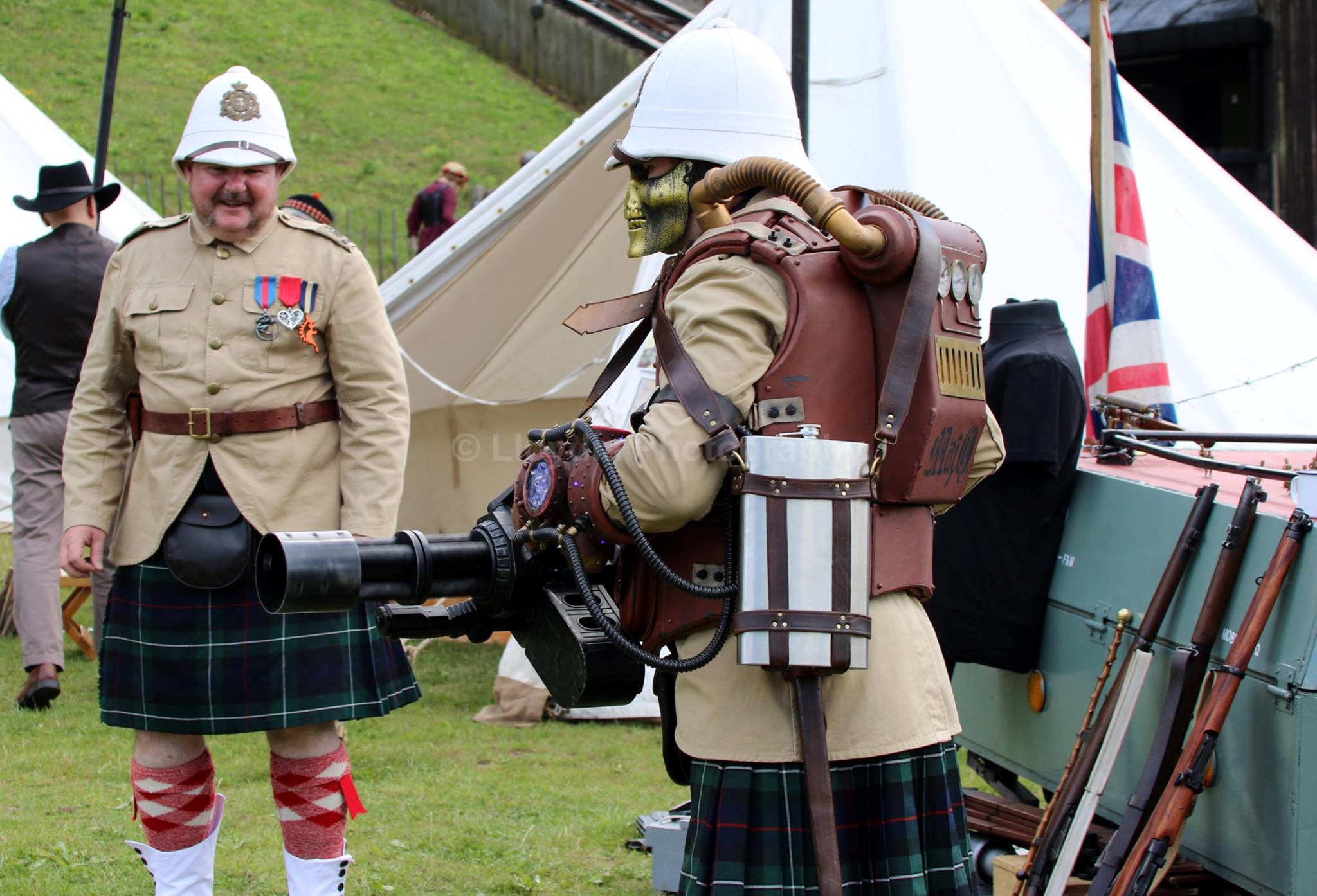
Although most SteamPunk groups are on FaceBook these days there are some dedicated forums full of cached information like:
http://welcometosteampunk.com/
http://brassgoggles.co.uk/forum/index.php
58
1870-1900 / SteamPunk and what it might mean to reenactors
« Last post by Karl Helweg on July 30, 2020, 03:33:51 PM »SteamPunk is a relatively recent name for an older idea of retrofuturism or science fiction through a Victorian's eyes.
One of the fun features of SteamPunk is that if you locked a dozen self described SteamPunks in a room and asked them to define what SteamPunk is you would receive approximately 64.1415 answers which would change five minutes later depending on how many decided to stay and continue the debate after they pick they pick the lock.
SteamPunk covers a very wide spectrum post apocalyptic wastelanders through some fairly hardcore Victorian era living history reenactors. They might be wearing amusing thrift store finds or carrying beautiful antique jewelry, pocket watches, and weapons.
This fandom movement has no real organization or leadership even though a few folks have tried desperately to establish themselves as elite expert by authorship. This vacuum may actually be attracting participants since it frees them to express themselves. There are local groups, sometimes called "airships", that come together to help each other do more.
As for what all is SteamPunk the list is long and includes things like: airships, octopi, corsets, pocket watches, time machines, games, goggles, vests, pirates, NERF guns, top hats, canes, wrenches, tesla coils, absinthe, cargo pants, etc....... Like the old saying goes: "I can't tell you what all is SteamPunk but I know it when I see it." SP has developed its own music, games, comics, and novels among other things.
So why would a reenactor want to go to a SP gathering? Fun. Escapism. Not being "on stage" every minute like at a formal living history event but still being able to make use of your historical knowledge and collected gear. There is not much of a place for authenticity police but organizers will have plenty to do. Recruiting.

One of the fun features of SteamPunk is that if you locked a dozen self described SteamPunks in a room and asked them to define what SteamPunk is you would receive approximately 64.1415 answers which would change five minutes later depending on how many decided to stay and continue the debate after they pick they pick the lock.
SteamPunk covers a very wide spectrum post apocalyptic wastelanders through some fairly hardcore Victorian era living history reenactors. They might be wearing amusing thrift store finds or carrying beautiful antique jewelry, pocket watches, and weapons.
This fandom movement has no real organization or leadership even though a few folks have tried desperately to establish themselves as elite expert by authorship. This vacuum may actually be attracting participants since it frees them to express themselves. There are local groups, sometimes called "airships", that come together to help each other do more.
As for what all is SteamPunk the list is long and includes things like: airships, octopi, corsets, pocket watches, time machines, games, goggles, vests, pirates, NERF guns, top hats, canes, wrenches, tesla coils, absinthe, cargo pants, etc....... Like the old saying goes: "I can't tell you what all is SteamPunk but I know it when I see it." SP has developed its own music, games, comics, and novels among other things.
So why would a reenactor want to go to a SP gathering? Fun. Escapism. Not being "on stage" every minute like at a formal living history event but still being able to make use of your historical knowledge and collected gear. There is not much of a place for authenticity police but organizers will have plenty to do. Recruiting.
59
Middle Ages / Re: Medieval Pyrates
« Last post by Karl Helweg on July 29, 2020, 05:20:20 PM »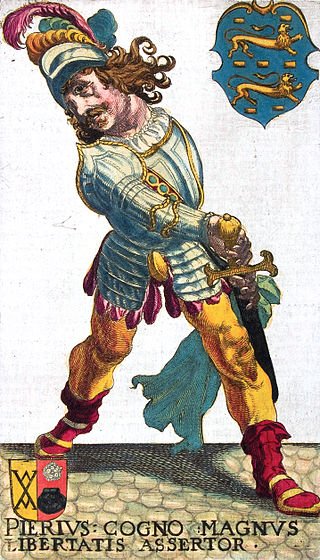
Pier Gerlofs Donia aka Grutte Pier
On 29 January 1515, the Black Band Landsknechts entered Grutte Pier's village. The arrival of these German mercenaries made people tremble with fear. During the 16th century the Black Band Landsknechts were one of the most feared soldiers on Europe’s battlefields.
In Grutte Pier’s village, the Black Band Landsknechts burned the church and Donia's estate. They murdered and plundered. Rintze Syrtsema, wife of Grutte Pier, was raped and killed.
Seeking revenge, Grutte Pier allied himself with Charles of Egmond, Duke of Gueldersand started a guerrilla war campaign against the House of Habsburg, also called the House of Austria. Grutte Pier blamed the Habsburg authorities for the events because they had employed the murderous regiment.
Grutte Pier targeted ships that travelled the Zuiderzee and was very active in 1517, when he used his "signal ships" to attack ships in the region of the West Frisian coast, to which he also transported Geldrian forces, setting them ashore at Medemblik. Pier bore a personal enmity to Medemblik and its inhabitants as, in earlier years, soldiers from Medemblik had cooperated with the Holland army commanded by Duke Charles, the future Emperor. In March 1498, Medemblik was where representatives of the Schieringers met the Saxon ruler duke Albrecht to request Saxon protection from the Vetkopers—a request that resulted in the Saxon occupation of Friesland, Netherlands. On 24 June 1517, Grutte Pier and his Arumer Zwarte Hoop, consisting of some 4,000 soldiers from Frisia and Guelders, sailed to West Frisia, passing Enkhuizen, landing near Wervershoof and advancing to Medemblik. They swiftly captured Medemblik, killing many inhabitants and taking many others prisoner. Some were released on payment of a high ransom. Some of the town's inhabitants fled and found safety at Kasteel Radboud. The castle's governor, Joost van Buren, succeeded in keeping the aggressors outside the castle walls. Unable to take the castle, the Arumer Zwarte Hoop plundered the town and set it on fire. With most houses made of wood, the town, including the church, monastery and town hall, was razed. After this partial victory, Pier and his army stormed both Nieuwburg and Middleburg Castle near Alkmaar, plundered and set them on fire, leaving only ruins.
In 1519, Grutte Pier retired and his Lieutenant Wijerd Jelckama took command over the the Arumer Zwarte Hoop. The peasant rebels fought for some years until they were finally captured and executed in 1523.
Grutte Pier died peacefully on 18 October 1520. Though he no sons, he has many descendants through his daughter, Wobel. His tomb is located in the city of Sneek.

https://en.wikipedia.org/wiki/Pier_Gerlofs_Donia
http://langenberg-laagland.com/histories/greatepierhistory.pdf

60
New Here? / Re: sword fighting
« Last post by Karl Helweg on July 16, 2020, 01:28:34 PM »Just a heads up that the SCA BoD has approved steel swords for combat:
https://www.sca.org/news/armored-combat-with-rebated-steel-blades/

https://www.sca.org/news/armored-combat-with-rebated-steel-blades/